Qui a épousé Juliana de Stolberg?
Philip II, Count of Hanau-Münzenberg a épousé Juliana de Stolberg le . Julienne de Stolberg avait 16 ans le jour du mariage (16 ans, 11 mois et 2 jours). Philip II, Count of Hanau-Münzenberg avait 21 ans le jour du mariage (21 ans, 5 mois et 10 jours). L'écart d'âge était de 4 ans, 6 mois et 8 jours.
Le mariage a duré 6 ans, 2 mois et 11 jours (2262 jours). Le mariage a pris fin le .
William I, Count of Nassau-Siegen a épousé Juliana de Stolberg le . Julienne de Stolberg avait 25 ans le jour du mariage (25 ans, 7 mois et 5 jours). William I, Count of Nassau-Siegen avait 44 ans le jour du mariage (44 ans, 5 mois et 11 jours). L'écart d'âge était de 18 ans, 10 mois et 6 jours.
Juliana de Stolberg: Chronologie de l'état du mariage
1 Pixel = 1 Month

Juliana de Stolberg

Juliana de Stolberg-Wernigerode (Stolberg, 15 de febrero de 1506-Dillenburg, 18 de junio de 1580) fue la madre de Guillermo de Orange, el principal impulsor durante el siglo XVI de la guerra de Flandes que los Países Bajos libraron para conseguir su independencia del Imperio español.
Lire la suite...
Philip II, Count of Hanau-Münzenberg
Le comte Philippe II de Hanau-Münzenberg ( à Hanau – à Hanau) est comte de Hanau-Münzenberg de 1512, jusqu'à sa mort. Il est le fils du comte Reinhard IV de Hanau-Münzenberg (en) et de son épouse, Catherine de Schwarzbourg-Blankenbourg (en).
Lire la suite...Juliana de Stolberg
William I, Count of Nassau-Siegen
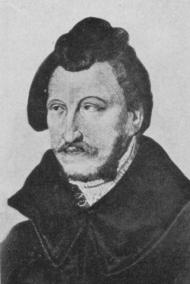
William I of Nassau-Siegen (German: Wilhelm I. Graf von Nassau-Siegen; 10 April 1487 – 6 October 1559), nicknamed the Elder (German: der Ältere) or the Rich (German: der Reiche), was Count of Nassau-Siegen and half of Diez from 1516 to 1559. He was a descendant of the Ottonian Line of the House of Nassau.
William's reign marked a notable period in the history of his house. During his reign, he introduced the Reformation in his territories, and the saw expansion of his county's territorial possessions. He promoted the Lutheran faith and played a key role in the political events of his time, including involvement in the Schmalkaldic League and negotiations leading to the Peace of Passau. William advanced the interests of his house through a policy of moderation, and contributed to its success.
A major challenge throughout his reign was the succession dispute over the County of Katzenelnbogen, which was contested by the Landgraviate of Hesse. This dispute was known as the War of the Katzenelnbogen Succession.
William was described as calm and persistent. He maintained firm religious convictions, and was resolute in asserting his rights in the Katzenelnbogische Erbfolgestreit. Through his diplomatic skills, he earned numerous mediation assignments within the Holy Roman Empire.
In Dutch history, he is primarily remembered as the father of Prince William the Silent.
Lire la suite...